What should you know before starting binary options trading as a beginner?
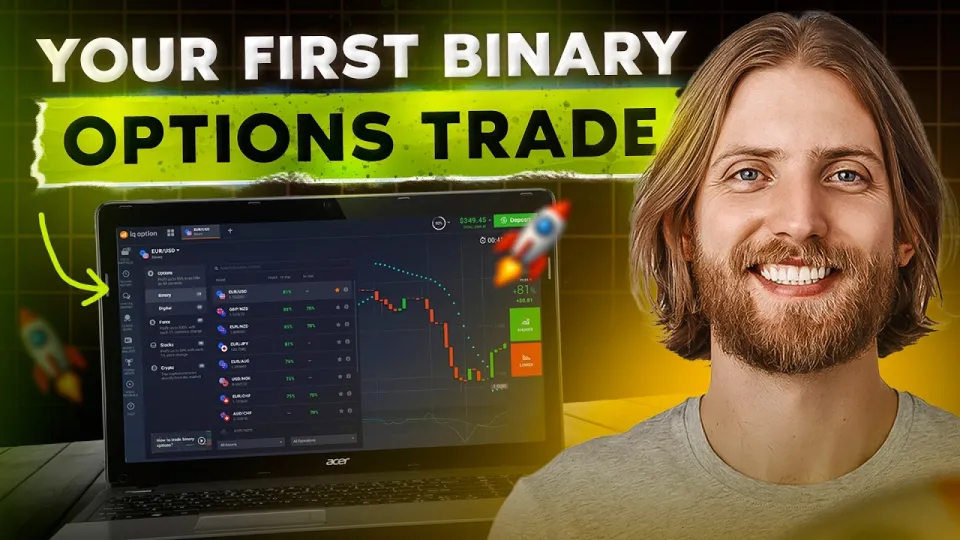
Video: Binary Options | Binary Options Tutorial for Beginners | Where Should You Start?
· based on the channel Binary options tutorial for beginners
Key takeaways
- Binary options are fixed-risk contracts: you stake an amount, pick up or down, and either collect a fixed payout or lose the stake.
- Typical payouts on beginner-friendly platforms sit around 70–95%, so a win rate near 55% is roughly the break-even zone.
- A 1–2% stake per trade keeps a 100-unit account alive through a normal losing streak.
- Demo trading for at least 50–100 logged trades is the standard first step before risking real money.
- Quotex, Pocket Option and Binarium are the three platforms featured in the video breakdown by Binary options tutorial for beginners.
Binary options are fixed-risk contracts in which you stake a set amount on whether an asset will be above or below its current price at a chosen expiry time, and you either receive a fixed payout or lose the stake. For a beginner, the right starting point is not a strategy but mechanics: understand the payout maths, trade a demo account for 50–100 logged trades, risk no more than 1–2% of the account per position, and only then move to real money on a regulated broker. A demo account on Quotex is the quickest way to see how expiry, payout and stake size interact before any deposit is made.
What binary options actually are and how a trade resolves
A binary option is a yes-or-no bet with a fixed expiry, and everything about the instrument follows from that structure. You choose an asset (currency pair, stock, index, commodity or crypto), an expiry (from 30 seconds on some platforms up to a day or more), a direction (higher or lower than the entry price) and a stake. At expiry the position resolves in one of two ways: in the money, and you get the stake back plus the payout percentage; out of the money, and the stake is gone in full.
The consequences matter more than the definition:
- There is no partial exit and no stop-loss inside the trade. Your maximum loss is the stake, fixed at entry.
- The payout percentage is the only thing that sets your break-even win rate. At an 80% payout you need roughly 55.6% accuracy to break even; at 90% you need about 52.6%; at 70% you need about 58.8%.
- Time is part of the bet. A correct direction with the wrong expiry still loses.
- Prices come from the broker's feed, so execution quality and quote transparency are part of the product, not a detail.
That last point is why platform choice is a risk decision. Regulation, withdrawal terms and the payout schedule deserve more attention than any indicator setup.
A concrete first-week plan for a binary options beginner
A beginner's first week should produce data, not profit, and a written routine is the simplest way to get there. Treat the first sessions as an audit of your own behaviour: how many trades you take per hour, whether you chase losses, and whether your results differ between expiries.
- Pick one asset and one expiry. EUR/USD with a 5-minute expiry, for example. Switching assets and timeframes every few trades makes your results impossible to read.
- Open a demo account and reset it deliberately. Start with a virtual balance that matches the real deposit you plan to make — 100 or 200 units, not 100,000.
- Fix the stake at 1–2% of the balance. On a 100-unit demo that is 1–2 units per trade. This is the single habit that separates a survivable account from a blown one.
- Log every trade. Asset, expiry, direction, reason for entry, result. Fifty to one hundred entries is enough to see whether an edge exists.
- Review the log before going live. If the win rate over that sample is below the break-even threshold for your payout, the strategy is not ready for real money.
Only after the demo log shows a stable process should a real account be funded — and then with an amount whose loss would not change your finances.
Payout maths and position sizing that keep an account alive
Position sizing is the only variable a trader fully controls in binary options, and it should be set before any chart is opened. Because each losing trade costs the full stake, a run of losses is arithmetically harsher than in instruments with adjustable exits.
With a 1% stake, ten consecutive losses cost about 10% of the account. With a 10% stake, the same streak costs roughly 65% — and recovering from that requires far more than a return to normal accuracy. A practical rule set:
- Risk 1% per trade while learning, 2% at most once results are consistent.
- Cap daily losses at 5% of the account and stop for the day when hit.
- Avoid martingale-style stake doubling after a loss; it converts a normal losing streak into a wipeout.
- Prefer expiries long enough to be analysed — 5 to 15 minutes on majors rather than 30-second contracts, where spread and noise dominate.
- Compare payouts across assets on the same platform; a 10-point payout difference changes the required win rate by several percentage points.
Typical beginner questions and misconceptions
Most beginner doubts come down to the same few themes: whether the instrument can be profitable at all, how much money is needed, and whether a signal provider or a bot can replace practice. On profitability, the honest answer is that binary options are a negative-sum game after the broker's margin — the payout is below fair odds — so a real edge has to come from accuracy above the break-even threshold, not from luck. On capital, a few hundred units is enough to learn with correct sizing; a large deposit with oversized stakes is the more common failure. On signals and bots, they remove the learning process that produces the discipline, and a copied signal cannot be sized to your account.
A related misconception is that a higher payout always means a better platform. Payouts shift with volatility and asset, and a generous headline number can sit next to slow withdrawals. Check regulation, withdrawal limits and processing times before comparing percentages.
Platforms and tools mentioned in the breakdown
The video breakdown by the channel Binary options tutorial for beginners points to three brokers and a VPN tool, and the links are worth collecting in one place for reference. Quotex is the first option listed and the one used as the entry point for a demo account; Pocket Option and Binarium are presented as alternatives with their own payout schedules and asset lists. A VPN is included for access and privacy considerations.
- Quotex: https://dakaklik.com/_quotex?creative_id=WzzpYsjS3ps
- Pocket Option: https://dakaklik.com/_PocketOption?creative_id=WzzpYsjS3ps
- Binarium: https://dakaklik.com/_Binarium?creative_id=WzzpYsjS3ps
- NordVPN: https://dakatop.link/Nord_us?creative_id=WzzpYsjS3ps
Whatever platform is chosen, verify its regulatory status, withdrawal terms and minimum deposit yourself before funding an account, and test the interface on demo first.
Conclusion
Binary options reward process discipline far more than prediction: fixed stakes, a logged demo sample, and a break-even win rate calculated from the actual payout are the foundation of any serious start. The mechanics are simple enough to learn in an afternoon, but the habit of risking 1–2% per trade takes deliberate practice. The video breakdown by Binary options tutorial for beginners walks through the same starting sequence and links the platforms it covers, and a Quotex demo registration is the natural first step before any real deposit. Start with one asset, one expiry and a written log, and let the numbers decide when to go live.
Questions & answers
How much money do I need to start binary options trading?
A few hundred units is enough to learn with correct sizing, because the goal of the first phase is a clean trade log, not income. What matters more is that the deposit is money you can afford to lose and that each stake stays at 1–2% of the balance. A large deposit with oversized trades fails faster than a small one with discipline.
Can binary options be profitable with a 70% payout?
Yes, but the accuracy required is high: at a 70% payout you need roughly a 58.8% win rate just to break even before fees. That is why payout percentage should be checked per asset and per platform, and why strategies are usually tested on higher-payout instruments first. Consistent results below that threshold mean the approach is not ready for real money.
Is a signal provider or trading bot a good shortcut for beginners?
Signals and bots skip the part of the learning curve that builds discipline, and a copied signal cannot be sized to your specific account. They also make results impossible to audit, since you never see the reasoning behind an entry. Demo trading with a personal log for 50–100 trades is a slower but far more useful shortcut.
Why do short expiries like 30 seconds usually hurt beginners?
Very short contracts are dominated by spread, noise and execution speed rather than analysis, so the outcome is close to random while the payout still sits below fair odds. Longer expiries of 5–15 minutes on liquid majors give a readable setup and enough time to judge direction. Beginners generally do better starting with the longer end of the range.
Source: Binary Options | Binary Options Tutorial for Beginners | Where Should You Start? · Markdown version